OpenAI has introduced a new version of ChatGPT based on a new artificial intelligence technology called OpenAI o1. What are the new features and how is the new version better for scientists?
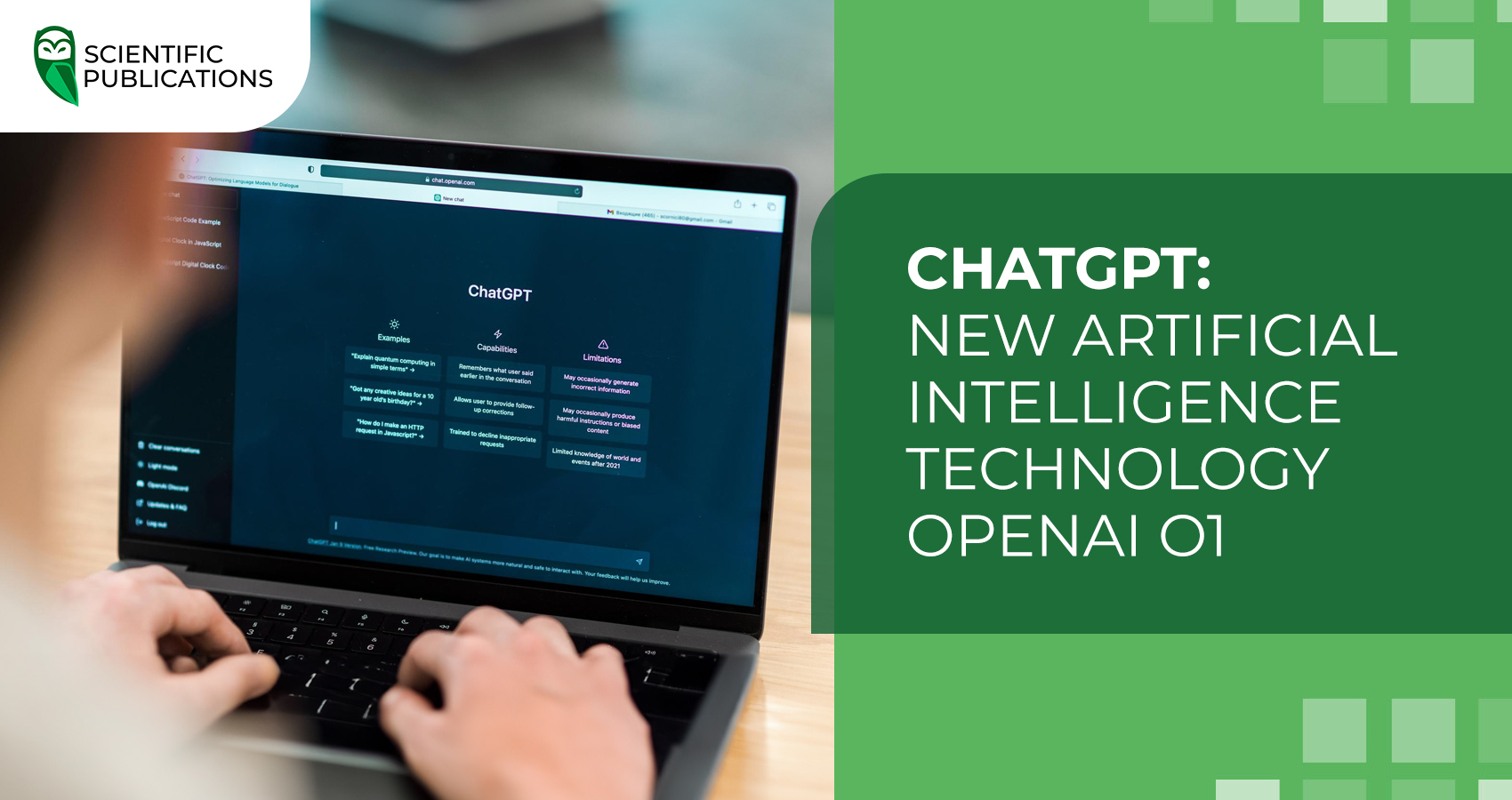
On September 12, OpenAI unveiled a new version of the ChatGPT virtual assistant based on OpenAI's new o1 artificial intelligence technology. Since the launch of the first version of ChatGPT in 2022, the chatbot has been constantly improving, providing users with new features. In this article, we will take a look at the latest updates and find out how the new version differs from the previous ones and how it is better.
Demo and features of the new ChatGPT
OpenAI has announced that a chatbot based on OpenAI's o1 technology is capable of "reasoning" by solving problems related to math, coding and science.
During a demonstration for The New York Times, the chatbot was presented with some puzzles and asked chemistry questions, which it answered at a PhD level, and diagnosed a disease based on a detailed report of the patient's symptoms and medical history.
The company also noted that the new technology could help physicists generate complex mathematical formulas and assist health researchers in their experiments.
Experts have taught these models to spend more time analyzing problems before providing an answer by mimicking a human's approach. Through this learning process, the models improve their thinking, try out different strategies and are able to recognize their mistakes.
The need to improve artificial intelligence
ChatGPT learned by analyzing large amounts of text from various sources on the Internet, particularly Wikipedia articles, books, and chat rooms. By analyzing patterns in the text, it gained the ability to generate new text on its own. However, due to the prevalence of false information on the internet, the model can reproduce these inaccuracies and sometimes even make them up.
The developers created the new OpenAI system using reinforcement learning, so that the system learns through multiple trials and errors, which can take weeks to months. For example, when solving math problems, the system discovers which methods lead to the correct result and which methods do not. After performing a large number of such tasks, it begins to notice patterns, but this does not mean that its thinking is similar to human thinking. OpenAI technicians emphasize that the system can still make mistakes and is not perfect, but users can expect it to work more diligentlyand be more likely to give correct answers.
Testing of the new OpenAI o1 technology
OpenAI stated that the new technology performed better than previous technologies on some standardized tests.
In tests, the new version of the model performs at the graduate level in challenging physics, chemistry, and biology benchmarks. The model also performs well in math and programming. On the AIME 2024 exam, the GPT-4o model was able to solve only 12% (1.8/15) of the problems on average. In contrast, the o1 model achieved 74% (11.1/15) solutions with one approach per problem, 83% (12.5/15) with consensus among 64 attempts, and 93% (13.9/15) when reranking 1000 attempts using the learned scoring function. A score of 13.9 places the student in the top 500 students nationally and exceeds the passing score for the U.S. Math Olympiad.
The model, initialized from o1 and enhanced for programming, scored 213 points and placed in the 49th percentile at the 2024 International Olympiad of Informatics (IOI). Under real competition conditions, 10 hours were allotted to solve 6 algorithmic problems with 50 attempts per problem. Applications were scored based on public and generated tests. If the answers were chosen randomly, the average score would have been only 156 points, indicating that the applied strategy added almost 60 points in a highly competitive environment. With softenedrestrictions on the number of attempts, the model achieved 362.14 points, exceeding the threshold for a gold medal. On the Codeforces platform, the GPT-4o model received an Elo3 808 rating, which corresponds to the 11th percentile among humans.
Access to the new ChatGPT
Access to the new technology began Sept. 12 for consumers and companies that subscribe to ChatGPT Plus and ChatGPT Teams services. The company is also selling the technology to software developers and companies that have built their own artificial intelligence applications.
ChatGPT Enterprise and Edu users will have access to both models starting Sept. 16. OpenAI plans to provide access to o1-mini to all free ChatGPT users, but the exact release date has not yet been determined.
Developer access to o1 is expensive: the o1-preview API charges $15 for 1 million inbound tokens and $60 for 1 million outbound tokens. In comparison, using GPT-4o costs $5 for 1 million inbound tokens and $15 for 1 million outbound tokens.
New opportunities for scientists and researchers
The new OpenAI o1 technology opens up many new opportunities for researchers and scientists, some of which are:
- better analytical capabilities. By quickly solving complex problems, scientists will be able to analyze and find the right solution faster. Also, thanks to the new technology, large amounts of data can be processed faster, which saves a lot of time when conducting research.
- literature review optimization. The model can quickly process a large number of scientific sources and help create high-quality literature reviews, which saves time for scientists when preparing articles and research.
- improving text quality. ChatGPT o1 will allow authors to better and more accurately edit the text of a scientific paper, correct errors and make suggestions to improve text quality. It is especially important for those authors who prepare a paper in a foreign language.
o1 - and its successors will open up many new possibilities for using AI in science, especially in coding, math, and related fields. Users and developers will soon find out how it can improve their daily work.
The new technology from OpenAI makes research preparation and writing scientific papers more efficient. However, it should be remembered that it is not perfect and can make mistakes. While tools such as ChatGPT can be useful in the preparation of articles, they can never completely replace an author's personal contribution.