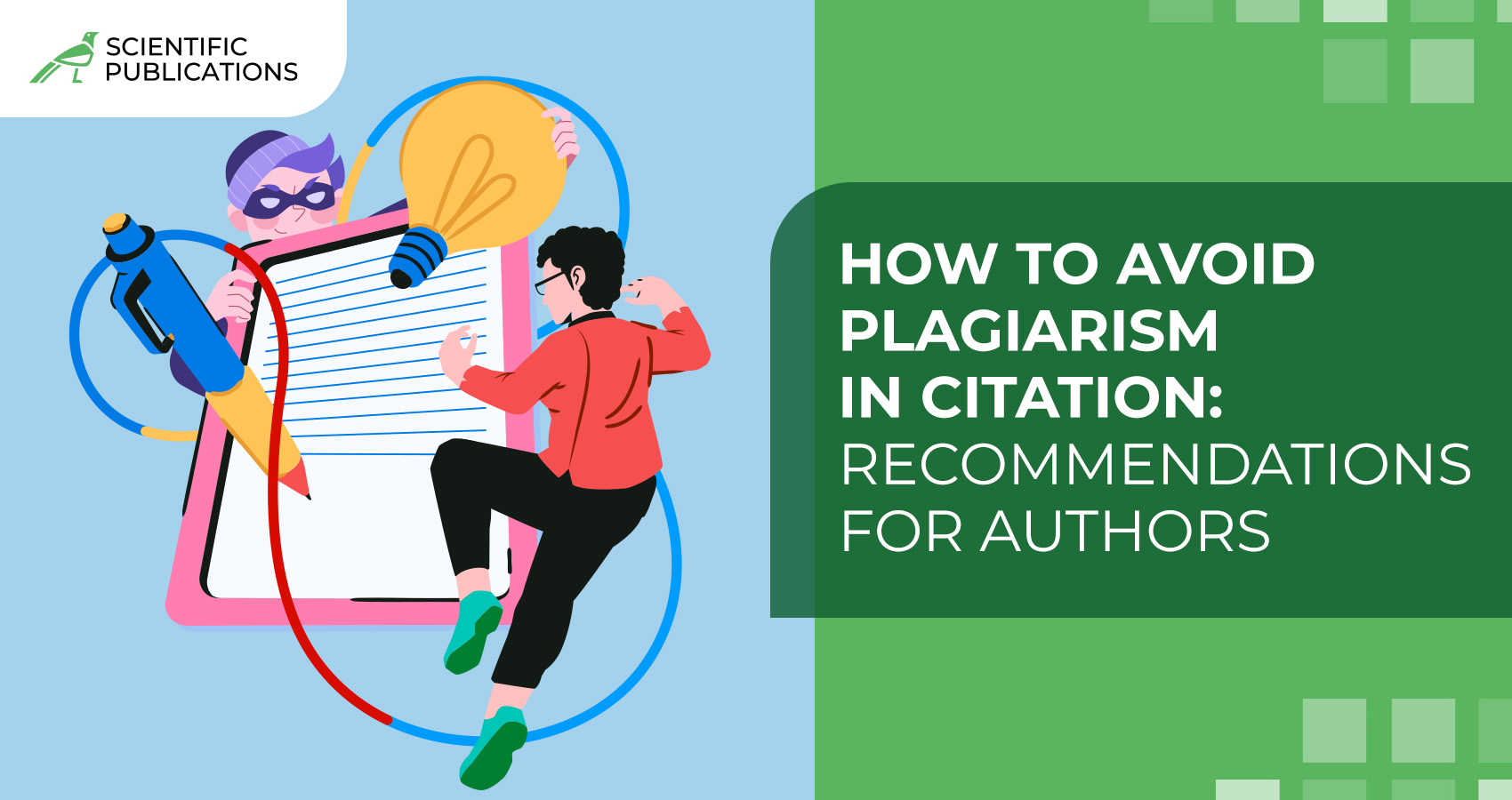
In the process of writing a research paper, the author analyses large volumes of scientific literature to make his or her research comprehensive and thorough. In order to comply with the principles of academic integrity, it is necessary to properly cite the research of other scientists whose information is used by the researcher. However, sometimes, consciously or unconsciously, an author may incorrectly cite another research paper or fail to indicate the source at all, which leads to plagiarism. In this article, we will give you a list of recommendations that will help you avoid plagiarism in the process of citation and write a research paper that does not violate the norms of scientific ethics.
1. Systematise the scientific literature
One of the common problems when writing research papers is the lack of a clear structure in the organisation of sources. This usually happens when the author does not ensure proper storage of references to the literature used during the writing process. As a result, in the process of editing or revising an article or dissertation, the author may forget to include some citations or incorrectly format references, thereby violating the norms of academic integrity.
To avoid such problems, it is important to systematise the literature at the stage of collecting materials. A convenient approach is to use special bibliography management software, such as Zotero or EndNote. These tools allow you to save references to sources and create separate lists by topic or research area. This approach will allow you to find the right sources faster and organise materials according to certain criteria. We recommend reading our article, in which we talked about useful tools for writing research papers.
In addition, it is worth keeping a detailed record of each source with its full bibliographic information, including the author, year of publication, title of the article or book, publisher, journal, etc. This will allow you to keep the references in the correct form and avoid confusion at the end of your work.
2. Do not search for sources through AI chats
Recently, AI chatbots such as ChatGPT have become extremely popular, and they are often used in writing research papers, in particular, to search for scientific literature or even to form the theoretical basis of a study.
However, this approach is extremely risky. Artificial intelligence is not only capable of inventing titles of scientific books, articles, or dissertations that do not exist in reality, but also generating theoretical positions that are not scientifically proven and do not correspond to reality.
For example, AI can provide false sources that cannot be verified, as well as propose pseudoscientific ideas or concepts that mislead the researcher. Such mistakes not only negatively affect the level of work, but can also lead to false conclusions that contradict real scientific data.
To avoid this, you should use only reputable databases, such as Scopus and Web of Science, libraries, and other trusted sources.
3. Check the citation style rules
Before you start working on your research, you should check with your supervisor or the institution you are writing for about the requirements for citation style. In general, there are dozens of citation styles, and each of them has its own specific features and rules of formatting.
One of the most common mistakes made by researchers is the incorrect formatting of the bibliography of scientific sources. This, in turn, is considered a violation of the standards of scientific ethics.
4. Cite your work correctly
It is not uncommon for authors to cite their previously published articles in a research paper. In such situations, it is important not only to take part of the text from another work, but also to indicate your authorship. This is called self-citation.
It is perfectly acceptable to make references to your own work in the scientific community, but you should not abuse this practice. Self-citation is measured as a percentage, and a maximum of 12% is considered acceptable. Excessive self-citation can be perceived negatively by the scientific community and is seen as an attempt to artificially increase the level of citation of one's own work.
When self-citing, you should follow the same rules of referencing as when citing other authors – provide full bibliographic data and follow a specific citation style (APA, MLA, Chicago, etc.). If you would like to learn more about the specifics of self-citation, read our article on this topic.
Following our recommendations will help you avoid plagiarism in your citations. The key aspects are the systematisation of sources in the course of writing a research paper and a thorough check of the references' compliance with a particular citation style.
If you need help with publishing an article in Scopus or Web of Science, contact "Scientific Publications". We will audit your article, check the correctness of the citation, help you choose the right journal, and provide support at all stages of the publication process. To get a free consultation, please fill out the form below, and our manager will contact you shortly. Together to new scientific achievements!